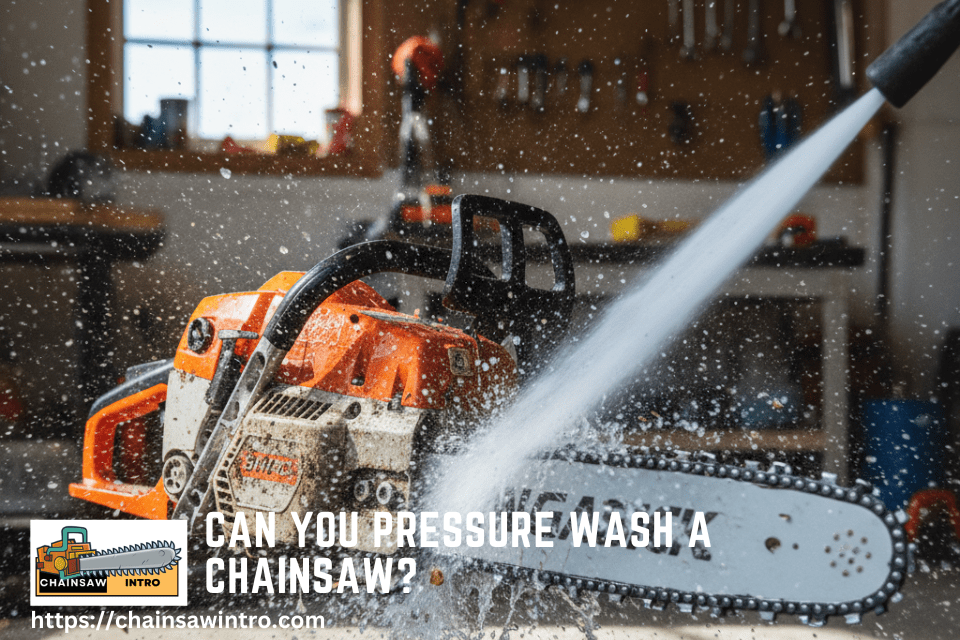

If you’ve ever finished a long day of cutting and stared at your chainsaw caked in sawdust, bar oil, and tree sap, you’ve probably thought the same thing: can I just blast this thing with a pressure washer and call it done?
It’s a fair question — and the answer isn’t a simple yes or no. Whether you can pressure wash a chainsaw depends on the type of saw you own, the pressure settings you use, and where exactly you aim the nozzle.
This guide breaks it all down so you can clean your chainsaw effectively without voiding your warranty or causing costly damage.
First, Why Does Cleaning a Chainsaw Matter?
A dirty chainsaw isn’t just ugly — it’s a liability. Built-up resin, sawdust, and old bar oil can:
- Clog the oil ports and starve the bar of lubrication
- Cause the chain to overheat and wear out faster
- Reduce cutting efficiency, making the saw work harder
- Shorten the lifespan of the sprocket, drive links, and bar
- Create a fire hazard if debris builds up near hot engine components
Regular cleaning — done the right way — keeps your chainsaw performing at its best for years.
Can You Pressure Wash a Chainsaw? The Short Answer
Yes — but only for gas-powered chainsaws, and only if you do it carefully. Electric and battery-powered chainsaws should never be pressure washed. Water and electrical components are a dangerous combination that can destroy the motor and create serious safety hazards.
Pro Tip: Even for gas-powered saws, pressure washing is not always the first recommendation. A proper brush cleaning with solvent handles most jobs perfectly fine.
Key Facts You Should Know
- Fact 1: Most chainsaw manufacturers do NOT recommend pressure washing in their owner’s manuals. Always check yours first.
- Fact 2: Water can push sawdust deeper into tight spaces if used at too high a pressure, making the problem worse.
- Fact 3: Bar oil is water-resistant by design — you may need a degreaser to fully remove built-up gunk before washing.
- Fact 4: High PSI (above 1,500) can damage gaskets, seals, and even strip painted surfaces on the chainsaw housing.
- Fact 5: Drying is just as important as washing. Leaving moisture in the chain links or bar groove accelerates rust formation.
Chainsaw Types & Pressure Washing Compatibility
Not all chainsaws are created equal when it comes to water exposure. Here’s a detailed breakdown of each chainsaw type and whether pressure washing is safe:
| Chainsaw Type | Drive Type | Pressure Wash Safe? | Max PSI Recommended | Key Risk Areas | Special Notes |
| Gas-Powered Chainsaw | Combustion Engine | Partial ⚠️ | 1,200 PSI | Carburetor, Air Filter, Fuel Cap | Remove air filter & cover fuel cap before washing |
| Electric Corded Chainsaw | Electric Motor | No ❌ | N/A | Motor housing, power cord, switch | NEVER pressure wash — water + electricity is fatal |
| Battery/Cordless Chainsaw | Li-Ion Battery | No ❌ | N/A | Battery terminals, charging port, motor | Remove battery; hand-wash only |
| Professional Gas Chainsaw | High-torque Engine | Partial ⚠️ | 1,500 PSI | Bearings, sprocket cover, ignition | Professional service recommended post-wash |
| Pole/Top Handle Chainsaw | Electric or Gas | Varies ⚠️ | 800 PSI (gas only) | Motor housing, pole joints, controls | Extremely delicate; avoid power washing if electric |
Chainsaw Types Explained
1. Gas-Powered Chainsaw
Gas-powered chainsaws are the most common type used by professionals and serious homeowners. They run on a mix of gasoline and two-stroke engine oil. Because they have no electrical components exposed to the outside, they can tolerate careful, low-pressure washing — but only on the bar, chain, and housing exterior.
Key precautions before washing a gas chainsaw:
- Remove and protect the air filter (water destroys it instantly)
- Cover the fuel cap and air intake
- Avoid spraying directly at the carburetor
- Let the engine cool completely before washing
2. Electric Corded Chainsaw
Electric corded chainsaws are powered by plugging into a wall outlet. They are completely off-limits for pressure washing. The motor housing, power cord, trigger switch, and internal wiring are all vulnerable to water intrusion. Even a small amount of moisture inside the motor can cause a short circuit, permanent motor failure, or worse — an electrocution risk when the saw is plugged back in.
Cleaning method: Use a dry brush, compressed air, and a slightly damp cloth on the exterior only.
3. Battery/Cordless Chainsaw
Battery-powered chainsaws offer the convenience of cordless operation but come with the same water sensitivity as their corded counterparts. The lithium-ion battery pack, charging port, and motor cannot be exposed to pressure washing. Water infiltrating the battery compartment can damage cells, trigger thermal runaway, or corrode terminals.
Always remove the battery before any cleaning, and keep water well away from the motor housing.
4. Professional Gas Chainsaw
Pro-grade gas chainsaws — like those used by arborists and logging crews — are built more robustly, but they’re also far more expensive and precision-tuned. While they can technically handle careful low-pressure washing, the stakes are higher. Many professionals prefer to use a combination of solvent cleaning and compressed air to protect the precision bearings, anti-vibration mounts, and advanced carburetor systems in these saws.
If you do pressure wash, keep PSI under 1,500 and keep the wand moving — never aim at a single spot for more than 2–3 seconds.
5. Pole/Top Handle Chainsaw
Pole saws and top-handle chainsaws (arborist saws) are designed for one-handed use and trimming at height. These are the most delicate of all chainsaw types when it comes to cleaning. The extended housing of pole saws often contains electrical cables running through joints, which are highly vulnerable to water ingress. For any electric pole chainsaw, avoid all water cleaning methods except a damp wipe-down.
How to Safely Pressure Wash a Gas Chainsaw (Step-by-Step)?
If you’ve determined that your saw is a gas-powered model and you want to proceed with pressure washing, follow these steps carefully:
- Step 1 — Remove the chain and bar: Take off the guide bar and chain completely. Clean these separately in a bucket of solvent or degreaser.
- Step 2 — Protect sensitive areas: Tape over the fuel cap, cover the air filter opening, and stuff a clean rag into the carburetor intake.
- Step 3 — Set your pressure washer low: Use a maximum of 1,200–1,500 PSI with a wide fan tip (25°–40° nozzle). Never use a zero-degree (red) nozzle.
- Step 4 — Keep distance and movement: Hold the wand at least 12 inches away and keep it constantly moving. Work from top to bottom.
- Step 5 — Rinse thoroughly: Make sure all loosened debris and degreaser are fully flushed away.
- Step 6 — Dry completely: Use compressed air to blow out all crevices. Let the saw air dry for at least 30–60 minutes before reassembly.
- Step 7 — Re-lubricate: Apply fresh bar oil and lightly oil the chain before reinstalling. Check all bolts are secure.
What NOT to Do When Washing a Chainsaw!
- Never aim at the carburetor, air filter, or exhaust port
- Never use hot water — it can warp plastic housing
- Never use a zero-degree pressure nozzle (too focused and powerful)
- Never pressure wash while the engine is warm
- Never skip the drying step — rust sets in within hours
- Never reassemble while any components are still damp
Frequently Asked Questions (FAQ)
Q1: Will pressure washing void my chainsaw’s warranty?
Possibly — yes. Many manufacturers explicitly state in their warranty terms that damage caused by improper cleaning, including high-pressure water washing, is not covered. Always check your owner’s manual before proceeding. When in doubt, stick to brush and solvent cleaning.
Q2: How often should I clean my chainsaw?
For regular use, a quick brush clean after every use is ideal. A deeper clean (including bar groove cleaning and chain bath) should be done every 5–10 hours of operation. A full teardown clean should happen at the start and end of every season.
Q3: What’s the best cleaner to use on a chainsaw?
A dedicated chainsaw degreaser or a general-purpose citrus degreaser works well for dissolving bar oil and resin. Avoid gasoline or harsh solvents on plastic components, as they can cause cracking or discoloration over time.
Q4: Can I use a garden hose instead of a pressure washer?
Yes, and this is often the safer choice! A garden hose with a spray nozzle delivers water at much lower pressure (typically 40–70 PSI), which is gentler on seals and gaskets while still rinsing away loose debris. For most homeowners, a hose plus a brush is all you need.
Q5: My chainsaw got rained on — is it ruined?
Not necessarily. Rain exposure is generally not enough to damage a gas-powered chainsaw, as long as you dry it properly afterward and run the engine briefly to clear any moisture from the ignition components. For electric or battery saws, if water has entered the housing, have it inspected by a professional before using it again.
Ready to Keep Your Chainsaw in Peak Condition?
Don’t wait until your chainsaw is caked in gunk and struggling to cut. Start a regular cleaning routine today — your chainsaw (and your wallet) will thank you.
- Bookmark this guide for your next cleaning session.
- Share this article with a fellow chainsaw owner who could use the tips.
Have questions about your specific chainsaw model? Drop a comment below — we read every single one!
Explore Related posts:
 Can Chainsaws Start a Fire? Causes, Risks, and Safety Tips
 What Happens If a Chainsaw Gets Wet? Risks, Tips & Maintenance Guide
 Do Chainsaws Overheat?
 Are Electric Chainsaws Loud? A Complete Guide
 Are Chainsaws Dangerous? The Dos And Don’ts
 How Are Chainsaws Dangerous? Things to Look Out For
 Is It Safe to Use a Chainsaw on a Ladder? Risks, Safety Tips & Safer Alternatives
 Is It Safe to Use a Chainsaw in the Rain? Safety Risks and Best Practices