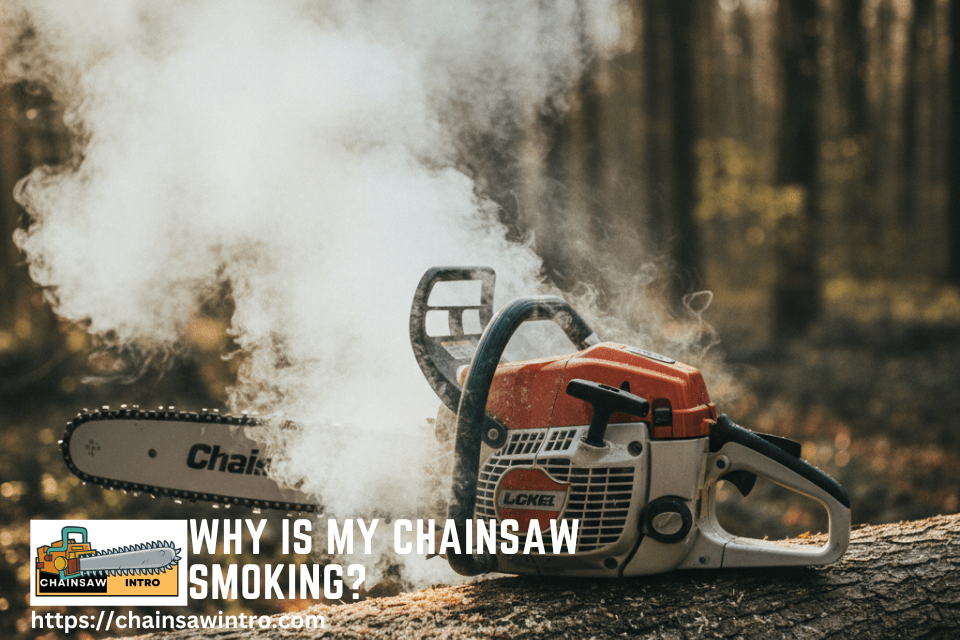

You pull the cord, your chainsaw roars to life — and then you see it. Smoke. Your heart sinks.
Before you assume the worst, take a breath. Chainsaw smoking is one of the most frequently reported issues by operators at every skill level. The good news? In the majority of cases it’s fixable in under an hour with basic tools.
The key is knowing what the smoke is telling you. Color, smell, and location of the smoke each point to a specific cause — and a specific fix. This guide walks you through all of it.
Key Facts About Chainsaw Smoking
Let’s start with some fast, important facts every chainsaw owner should have:
- Fact 1: Gas chainsaw engines run between 300°F and 500°F during operation — heat management is essential.
- Fact 2: The single most common cause of chainsaw smoking is an incorrect fuel-to-oil ratio. Most gas chainsaws require a 50:1 mix (50 parts gasoline to 1 part 2-stroke oil).
- Fact 3: A dull chain increases cutting friction by up to 50%, dramatically accelerating bar and chain overheating.
- Fact 4: Bar oil starvation can warp or destroy a guide bar in as little as 5 minutes of continuous hard use.
- Fact 5: Even electric and battery-powered chainsaws can smoke — usually signaling motor overload or a short circuit, both of which require immediate attention.
- Fact 6: Running with the choke left on is the #1 cause of black, sooty smoke in first-time chainsaw users.
Chainsaw Smoking Diagnosis: What Each Color Means!
This quick-reference table matches the smoke you’re seeing to the most likely cause and fix:
| Smoke Color | What It Signals | Danger Level | Root Cause | Immediate Action | Repair Time |
| White / Light Gray | Normal burn-in or excess bar oil | ✅ Low | New engine / over-oiling | Monitor; reduce bar oil | Minutes |
| Blue / Bluish-White | Oil burning in combustion chamber | ⚠️ Medium | Wrong fuel-oil mix ratio | Stop; re-mix fuel 50:1 | 30–60 min |
| Black / Dark Gray | Engine running rich / flooded | ⚠️ Medium | Choke left ON; clogged air filter | Reset choke; clean filter | 15–30 min |
| Thick Milky White | Water / coolant in engine | 🔴 High | Blown head gasket / cracked cylinder | STOP — do not restart | Professional repair |
| Gray + Burning Smell | Bar and chain overheating | 🔴 High | Low bar oil; dull chain | Stop; check oil & chain | 20–45 min |
| Black + Acrid / Plastic Smell | Electrical burn (electric saws) | ☠️ Critical | Motor overload or short circuit | STOP; disconnect power NOW | Professional repair |
How Does Chainsaw Smoke Actually Form?
To fix the problem, it helps to understand how it starts. Chainsaw smoking originates from three distinct mechanisms:
1. Combustion Smoke — From the Engine
Inside a two-stroke engine, fuel and air ignite hundreds of times per minute in a very precise ratio. When that ratio is off — too much oil, too little air, contaminated fuel — combustion becomes incomplete. Unburned fuel and oil particles exit through the exhaust as visible smoke.
Picture a bonfire trying to burn wet logs. Incomplete combustion always produces more smoke. The same principle applies inside your chainsaw’s cylinder.
2. Friction Smoke — From the Bar and Chain
The guide bar depends on a continuous film of bar oil to lubricate thousands of feet of chain travel per minute. When that oil supply drops, metal contacts metal at high speed. The resulting friction generates intense heat that burns off residual oil and debris — producing gray smoke and a sharp, burning smell.
This is arguably the most dangerous type of chainsaw smoking. An overheated bar can warp permanently. A snapping chain is a serious safety hazard. In dry conditions, ignited sawdust can start a fire.
3. Surface Smoke — Debris on Hot Exterior Parts
Sometimes what you’re seeing is not smoke from inside the machine at all. Sawdust, bark chips, or spilled bar oil landing on a hot exhaust cover or cylinder fin can combust briefly, creating small wisps of white smoke. Less serious than the other types, but still a sign your saw needs a thorough cleaning.
The Top Causes of Chainsaw Smoking — Fully Explained
Incorrect Fuel-to-Oil Mix Ratio
Two-stroke engines need oil mixed directly into their fuel — there’s no separate crankcase oil like a car engine. Get the ratio wrong and your engine tells you immediately.
- Too much oil in the mix → blue or white smoke, a fouled spark plug, and a saw that feels sluggish
- Too little oil → the engine runs dangerously hot — you often won’t see smoke until seizure is imminent
- Always use a quality 2-stroke oil and measure precisely — a simple mistake here is the fastest route to engine damage
Clogged or Dirty Air Filter
Your air filter’s job is to keep sawdust and debris out of the carburetor. When it clogs, the engine can’t get enough air and runs “rich” — flooding the combustion chamber with excess fuel. The result is dark black or gray smoke and rough, uneven idling.
The fix is quick and cheap: remove the filter, tap it out or blow it clean with compressed air, and replace it if it’s damaged. A replacement filter costs under $10 and swaps in minutes.
Bar Oil Starvation
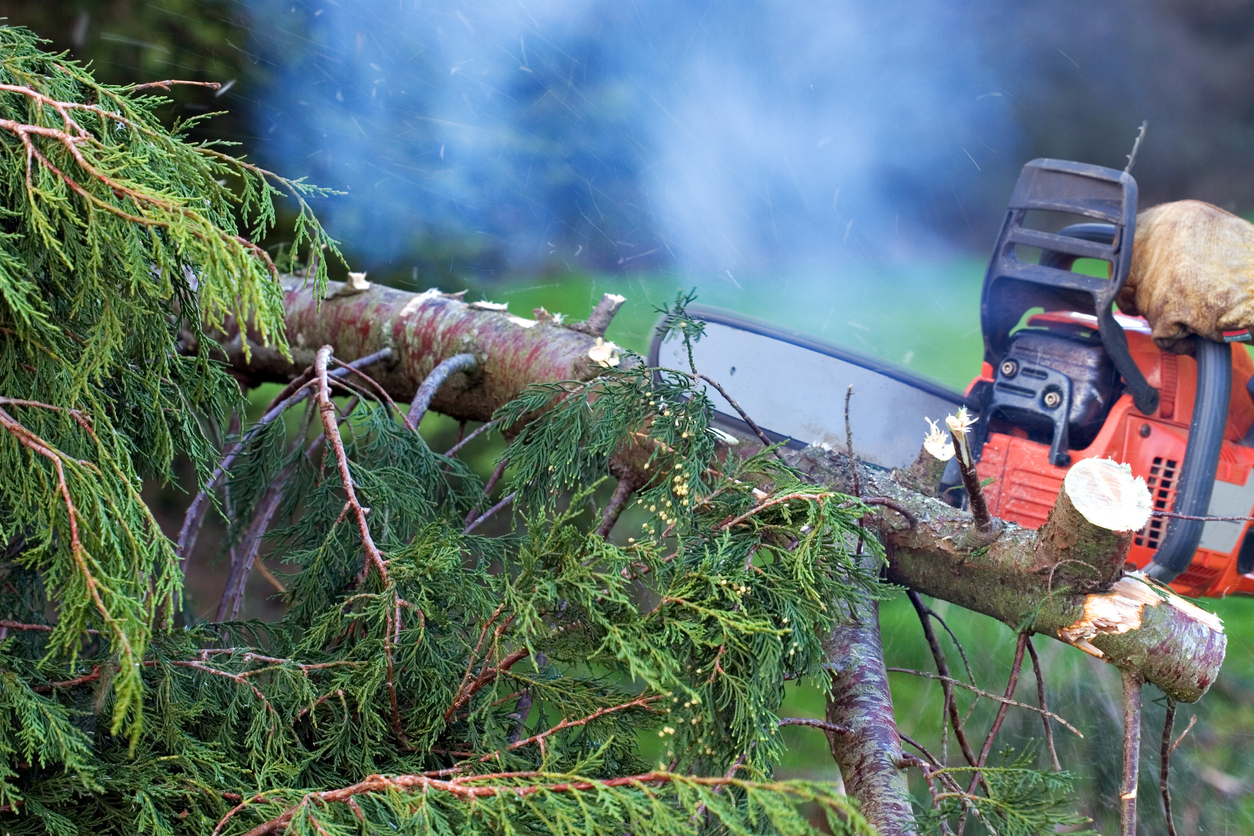
The bar oil tank feeds a continuous oil film to the guide bar while the chain runs. When the tank empties, the oiler port clogs, or the oil pump fails, the chain starts running dry almost instantly.
- Check the bar oil level every single time you refuel — make it a habit
- Inspect the oiler port for sawdust blockage; a toothpick or small pick clears it in seconds
- Test the oiler by holding the running saw over a pale surface — you should see an oil mist spray from the bar tip
Dull or Damaged Chain
A sharp chain slices cleanly through wood, producing chunky chips and requiring minimal force. A dull chain scrapes and drags — requiring more operator pressure, more engine effort, and generating far more heat at the bar.
Telltale signs of a dull chain: fine powdery dust instead of chips, smoke from the cut zone, and a burning wood smell even when bar oil looks fine. Sharpen or replace the chain and the difference is immediate.
Choke Left Engaged
The choke restricts airflow to enrich the fuel mixture for cold-start ignition. Once the engine warms up — usually after 30 to 60 seconds — the choke must be opened. Leaving it engaged floods the engine with excess fuel, producing thick black smoke and rough performance.
If you’ve been running a smoking saw and the choke is still closed, open it immediately and let the engine clear for a minute.
Engine Overheating From Continuous Use
Chainsaws are designed for intermittent work cycles, not non-stop operation. Heavy extended cutting pushes engine temperatures beyond their safe range. The engine will start to smoke, performance will drop, and if you keep going, you risk permanent damage.
⚠️ Rule of thumb: Give your chainsaw a 5–10 minute rest for every 20–30 minutes of hard cutting. This one habit prevents the majority of heat-related chainsaw smoking.
Blown Head Gasket or Cracked Cylinder
This is the serious diagnosis. Thick milky-white smoke — especially if the saw has been running poorly for a while — suggests coolant or water is mixing with oil inside the engine. This almost always points to a failed head gasket or a cracked cylinder wall.
Do not restart the saw. This type of chainsaw smoking requires professional repair or engine replacement. Running it further will cause complete engine failure.
What to Do the Moment Your Chainsaw Starts Smoking?
- Stop cutting immediately. Turn off the saw and place it on flat, non-flammable ground.
- Identify the smoke’s origin. Bar area? Exhaust port? Engine housing? Location narrows the cause fast.
- Note the color and smell. Use the table above to match your exact symptoms to a cause.
- Check the three basics first. Bar oil level, air filter condition, and fuel mix cover roughly 70% of all cases.
- Wait for it to cool completely. Allow at least 15–20 minutes before opening panels or covers.
- Fix the root cause — not the symptom. Restarting a smoking saw without addressing the issue always makes things worse.
- Test at low throttle. Run briefly to confirm the smoking has stopped before returning to full work.
Frequently Asked Questions
Q1: Is a little smoke from a brand-new chainsaw normal?
Yes, absolutely. A light wisp of white smoke during the first few uses is completely expected. New engines burn off factory oils and machining residues during their break-in period. If smoking persists beyond the first 2–3 hours of total use, start investigating with the causes above.
Q2: Can I keep cutting if the smoking is light and from the bar area?
Only briefly, and only after checking bar oil immediately. Light gray smoke from the bar usually means the oiler is struggling to keep up. Check the tank, clear the oiler port, and monitor closely. If smoke continues after topping up oil, stop — running a hot bar risks permanent warping and a potential chain snap.
Q3: How do I know if my bar oiler is actually working?
Simple test: With the chain running at full throttle, hold the bar tip a few inches above a sheet of cardboard or pale wood for three to four seconds. A properly working oiler will leave a visible spray line of oil on the surface. No mark means the oiler isn’t delivering oil — investigate the tank, port, and pump.
Q4: Why does my chainsaw only smoke at full throttle, not at idle?
This pattern almost always points to bar and chain friction rather than an engine issue. At idle the chain moves slowly and friction is minimal. At full throttle, chain speed multiplies dramatically — and if bar oil isn’t keeping up, heat spikes quickly. Start by checking the bar oil level and oiler function before looking at anything else.
Q5: My electric chainsaw smells like burning plastic. Should I be worried?
Yes — treat it seriously. A burning plastic or electrical smell from an electric or battery-powered chainsaw indicates motor winding insulation breaking down from overheating or an internal short circuit. Stop immediately, disconnect from power or remove the battery, and do not use it again until a qualified technician has inspected it.
Q6: Why is My Chainsaw Blowing Blue Smoke?
If your chainsaw is blowing blue smoke, it’s likely due to a problem with the piston or rings. If the piston is damaged, it can cause the engine to burn oil, which will lead to blue smoke coming from the exhaust. In some cases, the damage may be severe enough that the engine will need to be rebuilt or replaced.
Don’t Ignore That Smoke — Your Chainsaw Is Talking to You!
Every puff of chainsaw smoke is a warning sign — and the earlier you catch it, the cheaper and easier the fix. Whether it’s a simple fuel mix tweak or a bar oil top-up, acting fast keeps you cutting safely and keeps your equipment running strong for years to come.
- Bookmark this page — keep it handy for your next chainsaw session.
- Share it with your crew — one well-maintained saw keeps every job site safer.
- Drop a comment below — tell us what smoking issue you ran into and how you solved it!
- Still stumped? Describe your exact smoke type in the comments and we’ll help you diagnose it.