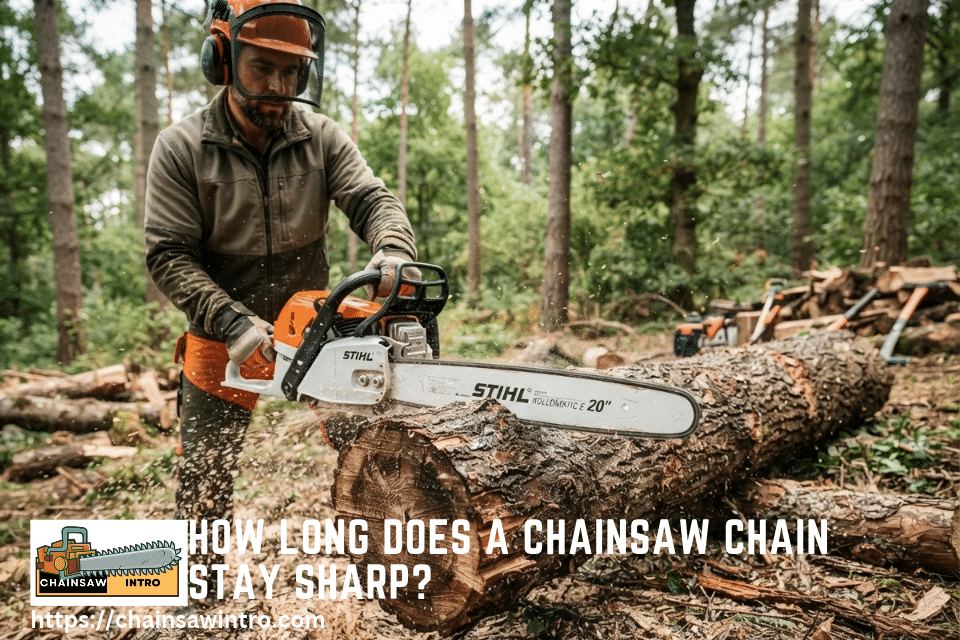

There’s no single honest answer to this question, because “how long” changes dramatically depending on exactly what you’re cutting. Instead of one generic number, let’s break this down by the actual scenarios you’re likely to encounter.
By the end, you’ll be able to look at your own typical cutting situation and know roughly what to expect, rather than comparing yourself against a one-size-fits-all average.
Let’s go scenario by scenario, from the easiest conditions on a chain to the toughest.
This scenario-first approach gets you a much more useful answer than a single generic timeframe, since your actual cutting situation almost certainly resembles one of these more than it resembles a vague overall average.
Quick Answer: Anywhere From Under an Hour to Several Hours
A chainsaw chain can stay sharp anywhere from under an hour to several hours of active cutting, depending heavily on wood type and conditions. Clean softwood sits at the favorable end of that range, hardwood and ground-contact cutting sit at the demanding end, and most real-world use falls somewhere in between.
Cutting Clean Softwood: The Best-Case Scenario
This is about as favorable as conditions get for chain longevity.
- Pine, fir, cedar, and similar softwoods offer relatively low resistance to the chain
- Clean, seasoned softwood free of dirt or bark contact minimizes abrasive wear
- Under these conditions, a chain can often stay usably sharp for a couple of hours of active cutting or more
If this describes your typical cutting situation, you’re working under close to ideal conditions for chain longevity.
It’s worth appreciating this scenario if it applies to you, since it’s genuinely the easiest situation your chain will ever face — everything else on this list demands more from the same piece of equipment.
Cutting Hardwood: Expect a Shorter Window
Hardwood introduces a different kind of challenge, even when it’s perfectly clean.
- Dense species like oak, maple, and hickory demand more cutting force per pass
- This mechanical resistance dulls a chain faster than softwood, even without any dirt involved
- Expect a noticeably shorter sharp-edge window in hardwood, even under otherwise ideal, clean conditions
This is a genuinely different dulling mechanism than dirt-related wear, which is exactly why hardwood shortens your window even when everything else about your setup is working well.
Cutting Near the Ground or Storm-Damaged Wood: The Toughest Scenario
This is where you’ll see the shortest sharp-edge window by far.
- Ground-level cuts risk soil and grit contact, which dulls a chain through abrasive wear
- Storm-damaged wood often carries embedded debris picked up during the storm itself
- Under these conditions, a chain might need attention within well under an hour of active cutting
If your work regularly involves this kind of material, expect to sharpen far more often than the general baseline would suggest, and don’t read that as a sign anything’s wrong with your chain or technique.
This is exactly the scenario where a shift toward semi-chisel or even carbide chain, discussed elsewhere, starts to genuinely pay off, since the abrasive wear mechanism here is precisely what those chain choices are designed to resist.
Milling: A Different Duration Calculation Entirely
Milling changes the math in a different way, worth mentioning separately.
- Milling involves continuous, extended engagement of the chain along the length of a log
- This sustained cutting action, combined with ripping-style cutting geometry, wears differently than intermittent crosscutting
- Milling chains, especially in extended sessions, often need attention based on total board footage cut rather than simple elapsed time
If you’re milling regularly, tracking your sharpening interval by footage or log count often makes more sense than trying to apply a general time-based estimate.
Firewood Processing: A Realistic Middle Ground
This is probably the scenario most readers actually fall into, and it sits between the extremes covered above.
- Firewood processing usually involves a mix of wood types and occasional bark or minor debris contact
- This typically lands somewhere in the middle of the overall range, often close to a tank of fuel or a comparable session length
- Actual results vary based on your specific wood source and how much handling or ground contact it’s had
If you’re processing firewood regularly, this middle-ground expectation is probably your most useful practical benchmark.
What This Means for Your Own Sharpening Schedule
Rather than memorizing a single number, use this framework to set your own realistic expectations:
- Identify which scenario above most closely matches your typical cutting situation
- Use that scenario’s rough timeframe as your working expectation, not the general overall average
- Adjust your mental benchmark if you regularly mix conditions, like both clean softwood and occasional ground-contact cuts
This scenario-based approach gives you a far more accurate personal benchmark than any single generic number ever could.
The Bottom Line
How long does a chainsaw chain stay sharp? It genuinely depends on what you’re cutting: clean softwood offers the longest window, hardwood shortens it through density alone, ground contact and storm debris shorten it dramatically through abrasion, and firewood processing typically lands somewhere in the middle.
Match your expectations to your actual scenario rather than a single average, and you’ll have a genuinely useful benchmark for your own sharpening routine.
Frequently Asked Quwstions
How long does a chainsaw chain stay sharp?
It varies significantly by scenario, ranging from under an hour in tough conditions to several hours in clean softwood.
Why does hardwood shorten a chain’s sharp-edge window?
Dense wood fibers demand more cutting force, dulling the chain through mechanical stress even when clean.
Does cutting near the ground really make that much difference?
Yes, soil and grit contact can dull a chain within well under an hour compared to clean cutting conditions.
How is milling different when it comes to staying sharp?
Continuous engagement and ripping-style cutting mean tracking by footage often makes more sense than by time alone.
What’s a realistic expectation for firewood processing?
Often close to a tank of fuel or a comparable session, landing between the best and worst-case scenarios.
Match Your Expectations to Your Actual Cutting
Think about which scenario above most closely matches your typical work, and use that as your real benchmark going forward. If you’re regularly surprised by how fast your chain dulls, it might simply mean your conditions are tougher than the general average assumes, not that something’s wrong. Sharpen based on your actual situation, not a one-size-fits-all number.

I’ve spent the past 10+ years working with chainsaws in forestry, landscaping, and firewood preparation. Along the way, I’ve gained certifications in chainsaw operation and safety and built extensive experience with trusted brands like Stihl, Husqvarna, and Oregon. I enjoy sharing my knowledge through step-by-step guides, tool reviews, and safety advice so others can get the most from their chainsaws while staying safe on every job.
Explore Related posts:
 How Long Does a Battery-Powered Chainsaw Last? Runtime & Lifespan Explained
 Are Einhell Chainsaws Any Good? A Comprehensive Review
 Are Ryobi Chainsaws Any Good? Performance, Durability & Buyer’s Guide
 Can Chainsaws Cut Metal? Dangers, Damage & Safer Alternatives Explained
 Do Electric Chainsaws Need Oil? Everything You Must Know About Bar & Chain Lubrication
 How Long Of A Chainsaw Do I Need?
 How Many Times Can You Sharpen a Chainsaw Blade? Here’s What Actually Determines It
 Best One Hand Chainsaw: 5 Picks for Control, Precision and All-Day Comfort