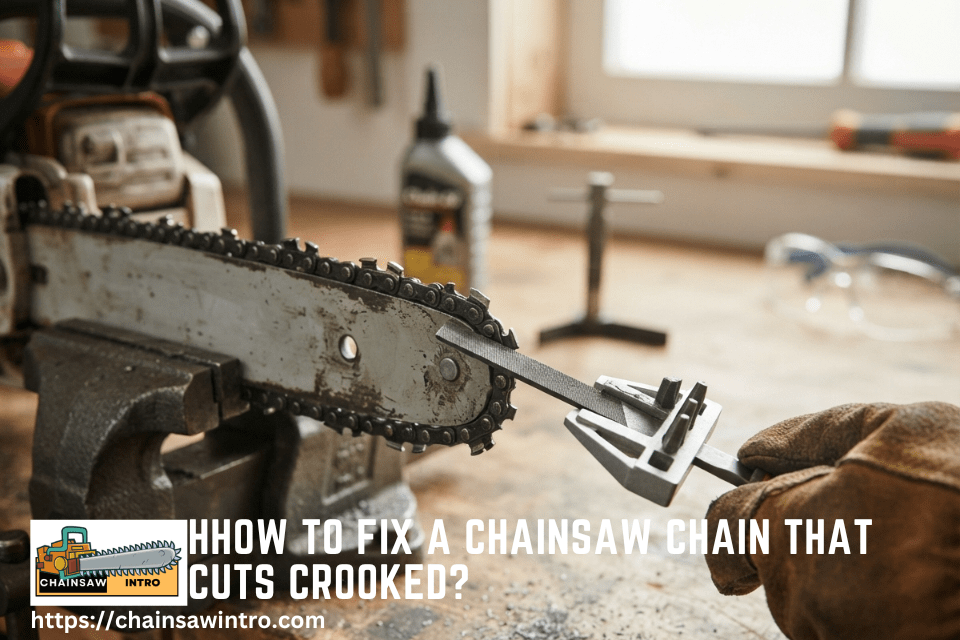

You’re trying to make a straight cut, but the bar keeps drifting off to one side no matter how carefully you guide it. It’s not you — something about the chain itself is pulling the cut crooked, and it’s more common than you’d think.
The good news is that this is almost always a fixable problem, and once you understand the actual mechanism causing it, the fix makes a lot of sense. Let’s walk through why this happens and exactly how to correct it.
Quick note: this issue is often called “cutting off angle” or a chain “wandering,” and it’s one of the more common chainsaw complaints out there.
It’s also a genuinely satisfying problem to solve once you understand it, since the fix doesn’t require any new parts — just a bit of careful, deliberate filing work with the chain you already have.
Quick Answer: Usually Uneven Cutters, Sometimes a Bent Bar
A chainsaw chain that cuts crooked is most often caused by uneven cutting teeth — one side of the chain has longer or sharper cutters than the other, pulling the cut toward the side doing less work. The fix is filing the less-worn side down to match the shorter side, restoring balance across the whole chain. In less common cases, a bent guide bar is the actual culprit.
Why Chains Cut Crooked: The Real Cause
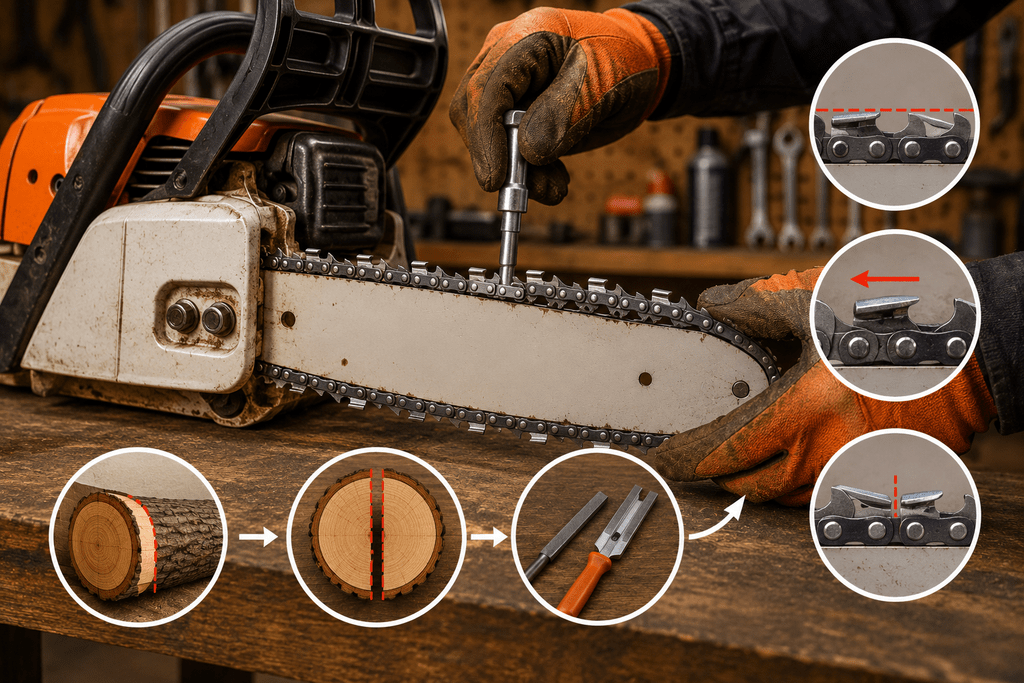
Here’s the mechanism worth understanding first, since it explains why the fix works the way it does. A chainsaw chain has cutters on both sides, alternating as they go around the loop. If the cutters on one side are shorter than the ones on the other side, that shorter side removes less material with each pass.
The side removing more material effectively pulls the bar in that direction as you cut, since it’s cutting a slightly wider path than the other side. The result is a curved, drifting cut instead of a straight one.
- Inconsistent hand-filing technique is the most common cause, with more pressure or more strokes applied to one side than the other
- Damage to cutters on one side, like a rock strike, can create an imbalance even if you started with an even chain
- Uneven depth gauge height across the chain can compound the problem further
A helpful way to picture this: imagine rowing a boat with one oar taking longer, more powerful strokes than the other. Even with a straight-ahead intention, the boat curves toward the weaker side. A chain works the same way — whichever side is cutting less pulls the whole bar in that direction.
How to Diagnose Which Side Is the Problem?
Before fixing anything, confirm exactly what’s going on with a close visual inspection:
- Lay the chain out or leave it on the bar, and compare cutter length side by side, tooth by tooth
- Look for one side that’s visibly shorter or more rounded than the other
- Check for any chipped, cracked, or damaged cutters isolated to one side
- Note which direction the cut has actually been drifting, since that tells you which side is cutting more aggressively
A chain with one side clearly shorter than the other is your answer. If both sides look reasonably even, the problem may actually be your guide bar instead, which we’ll cover shortly.
The Fix: Evening Out Your Cutters
Here’s the part that surprises people: you can’t lengthen a short cutter back out. The fix isn’t about restoring the shorter side — it’s about filing the longer side down to match it.
- Identify the shortest cutter on the chain, since this becomes your new target length for every other cutter
- File every other cutter, especially on the longer side, down to match that shortest cutter’s length
- Use consistent filing angle, pressure, and stroke count across every single cutter this time around
- A bar-mounted filing guide helps maintain that consistency far more reliably than filing entirely freehand
Yes, this means sacrificing some cutter length you didn’t strictly need to remove. But it’s the only way to restore a chain that cuts straight, since matching length across both sides is what keeps the chain cutting evenly.
This is exactly why prevention matters so much here — every time you have to correct an imbalance, you’re spending extra cutter life you didn’t need to spend. A chain filed evenly from the start avoids this trade-off entirely.
Don’t Forget the Depth Gauges
While you’re addressing cutter length, check your depth gauges (rakers) too. Uneven depth gauge height across the chain can contribute to crooked cutting even after you’ve evened out the cutters themselves.
- Depth gauges control how aggressively each cutter bites into the wood
- Use a depth gauge tool matched to your chain’s specifications to check and correct height uniformly
- Address this after cutter length, since cutter height changes affect the relative depth gauge measurement too
Getting both cutter length and depth gauge height consistent across the whole chain is what actually restores straight, predictable cutting.
When the Problem Is the Bar, Not the Chain
If your cutters look reasonably even but the saw still cuts crooked, the guide bar itself may be the actual issue.
- A bent bar will cause crooked cuts regardless of how well the chain is sharpened
- Uneven wear along the bar’s rails can cause the chain to track inconsistently
- Sight down the length of the bar to check for any visible bend, or use a straightedge along the rails
- Many bars are designed to be flipped periodically, which helps promote even wear and can be a simple first troubleshooting step
A genuinely bent bar generally isn’t worth trying to straighten for precision work — replacement is usually the safer, more reliable fix.
Testing Your Fix
Once you’ve evened out the chain (and checked the bar), confirm the fix with a test cut:
- Make a straightforward cut through a scrap piece of wood
- Watch closely for any drift to either side
- If the cut runs straight, you’ve successfully rebalanced the chain
- If drift persists, double-check your cutter lengths again, since even small remaining differences can still cause noticeable drift
Small amounts of drift may take a couple of passes to fully correct, especially if the imbalance was significant to start with.
Preventing Crooked Cuts in the Future
A few habits help you avoid this problem going forward:
- Use a bar-mounted filing guide consistently, rather than relying entirely on freehand technique
- Count your filing strokes per cutter and apply the same count and pressure to every tooth
- Address any one-sided damage immediately, rather than letting an imbalance develop gradually
- Flip your guide bar periodically to promote even wear across both rails
- Consider a chain sharpening service or an electric sharpener if consistent hand-filing proves difficult
When to Get Professional Help!
A few situations are worth bringing to a professional rather than continuing to self-correct:
- You’ve attempted to even out the cutters but the chain still drifts noticeably
- You suspect a bent bar and aren’t confident assessing it yourself
- The chain shows damage beyond simple unevenness, like cracks or worn rivets
- You’d simply prefer a guaranteed even result over repeated DIY attempts
There’s no shame in handing this one to a shop — a professional sharpening service can often restore even cutting faster than several rounds of DIY trial and error.
The Bottom Line
A chainsaw chain that cuts crooked almost always comes down to uneven cutter length between the two sides of the chain, and the fix is filing the longer side down to match the shorter one — not trying to restore the shorter side. Check your depth gauges too, and rule out a bent bar if the chain itself looks even.
With a bit of careful, consistent filing, most crooked-cutting chains are fully fixable without buying anything new. Take your time, use a filing guide if you have one, and test your work before trusting it to a real job.
Frequently Asked Questions
Why does my chainsaw chain cut crooked?
Usually because cutters on one side of the chain are longer than the other, pulling the cut toward the shorter side.
How do I fix uneven chainsaw cutters?
File the longer side’s cutters down to match the shortest cutter on the chain, restoring even length across both sides.
Can a bent guide bar cause crooked cuts?
Yes. If the chain itself looks even but cutting is still crooked, a bent or unevenly worn bar may be the real cause.
Do depth gauges affect whether a chain cuts straight?
Yes, uneven depth gauge height across the chain can contribute to crooked cutting even with even cutter length.
Should I replace a bent chainsaw bar or try to fix it?
Replacement is usually the safer, more reliable option, since straightening a bent bar rarely restores full precision.
Straighten Out That Cut
Before your next job, take a close look at your chain’s cutters side by side. If one side is clearly shorter, grab your file and even things out, checking depth gauges along the way. If the chain looks fine but the drift persists, give your guide bar a close inspection too. A little careful filing usually brings a crooked-cutting chain right back to straight, clean cuts.

I’m a chainsaw expert with over 8 years of hands-on experience in forestry, landscaping, and property maintenance. Over the years, I’ve worked with top brands like Stihl, Husqvarna, and Oregon, and I’m certified in chainsaw safety and maintenance practices. My goal is to share practical guides, honest reviews, and proven safety tips to help homeowners, DIYers, and professionals use chainsaws more effectively and confidently.
Explore Related posts:
 How Long Does a Chainsaw Bar Last?
 Do Chainsaw Chains Stretch?
 Why Is My Chainsaw Smoking?
 Can Chainsaws Be Stored Vertically? Pros, Cons & Best Storage Practices
 How to Know If Your Chainsaw Bar Is Worn Out? Signs, Tips & Replacement Guide
 How to Tell If Your Chainsaw Sprocket Is Worn Out? Signs, Replacement & Maintenance Tips
 Why Is My Chainsaw Chain Not Spinning? Start With This One Question