
You just installed or adjusted your chain, and you notice it has a bit of give when you pull on it — not perfectly rigid against the bar. Is that a mistake, or is this actually how it’s supposed to feel? If you’ve been assuming tighter is always better, this is worth clearing up.
Short answer: yes, a small amount of give is completely normal and, in fact, correct. Let’s talk about why that’s actually by design, and exactly how much give is the right amount.
This is one of the more common points of confusion for newer chainsaw owners, so you’re definitely not alone in wondering about it.
Let’s clear up exactly why some give is intentional, how much is actually correct, and where the real line sits between normal and genuinely too loose.
Quick Answer: A Small Amount of Give Is Correct
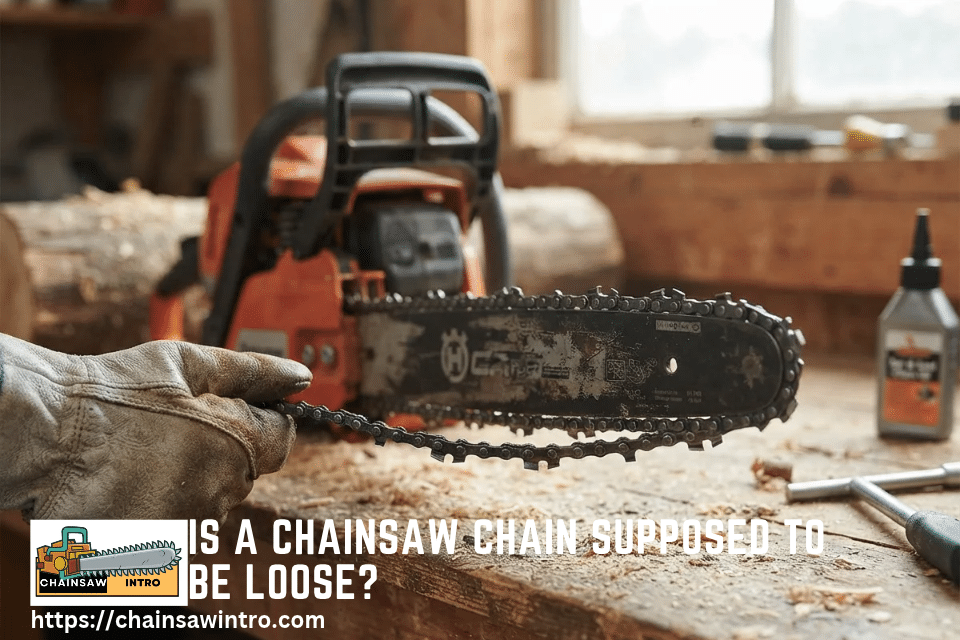
Yes, a chainsaw chain is supposed to have a small amount of give when you pull it away from the bottom of the bar, roughly the thickness of a dime. A chain with zero movement at all is actually over-tightened, not correctly adjusted. Some slack is intentional, not a sign something's wrong.
Why Some Looseness Is Actually Built Into Correct Tension?
This isn’t an accident or a compromise — a small amount of give serves real mechanical purposes.
- Chains expand slightly as they heat up during use, and proper tension needs to accommodate that expansion without binding
- The chain needs enough freedom of movement to travel smoothly around the bar without excessive friction
- A chain with zero give at all would bind against the bar, straining the engine and generating excess heat
In other words, that small amount of give isn’t a flaw in your adjustment — it’s a necessary part of how the whole system is designed to work.
Manufacturers engineer this tolerance deliberately into the tensioning specification, the same way other mechanical systems build in small clearances on purpose rather than by oversight.
The Right Amount: How Much Give Is Normal
A simple physical test tells you whether your chain’s give falls in the correct range:
- With the saw off, pull the chain away from the middle of the bar’s underside
- It should move away roughly the thickness of a dime, about 1/16 of an inch
- The chain should snap back against the bar once released, rather than staying loose or feeling stiff and resistant
This test gives you a concrete, repeatable reference point instead of relying purely on a vague sense of “does this feel right.”
What Happens If You Over-Tighten to Eliminate All Slack
If you’ve been tightening your chain until it shows zero movement at all, thinking that’s the safest approach, it’s worth understanding why that’s actually the wrong instinct.
- An over-tightened chain creates excess strain on the bar, sprocket, and engine
- This can reduce chain speed and overall cutting efficiency
- Excess friction from over-tightening generates more heat, accelerating wear on multiple components at once
This is really the opposite mistake from running a chain too loose, but it’s just as much of a genuine problem, not a safer alternative.
It’s an understandable instinct, especially after hearing warnings about the risks of a loose chain, to overcorrect in the other direction. But the correct target is genuinely the middle ground, not either extreme.
Normal Give vs. Genuinely Too Loose: Knowing the Difference
Since “some looseness is correct” might make you wonder where the actual line is, here’s the practical distinction.
- Normal, correct give: roughly a dime’s thickness of movement, with the chain snapping back into place against the bar
- Genuinely too loose: the chain sags noticeably, pulls far away from the bar, or you can easily pull individual links out of the groove
- If you’re ever unsure, checking against your saw’s specific owner’s manual removes any remaining doubt
This distinction matters because “some give is normal” shouldn’t be mistaken for “any amount of give is fine” — there’s still a real, meaningful difference between correct tension and a chain that’s genuinely too loose.
Why This Confuses First-Time Owners
It’s worth understanding why this particular question trips people up so often, since it’s a genuinely reasonable point of confusion.
- Many other mechanical systems people are familiar with, like a bolt or a fastener, are meant to be tightened until fully secure with zero play
- Applying that same instinct to chain tension leads naturally to over-tightening
- Chainsaw chains are a different kind of system entirely, more like a properly tensioned bicycle chain, which also needs a small amount of give to function correctly
Once you understand the comparison to something like a bike chain, the concept usually clicks much faster than trying to memorize an abstract rule.
This is really just a matter of recalibrating your mental model for what “correctly adjusted” looks like in this specific context, rather than applying a one-size-fits-all instinct from unrelated mechanical experience.
The Bottom Line
Is a chainsaw chain supposed to be loose? A little, yes — roughly a dime’s thickness of give when pulled away from the bar is correct and intentional, not a sign of improper adjustment. A chain with zero movement at all is actually over-tightened, which brings its own set of problems.
Use the dime test as your practical reference point, and you’ll know your tension is genuinely correct, rather than swinging too far in either direction.
Frequently Asked Questions
Is a chainsaw chain supposed to be loose?
A small amount of give, roughly a dime’s thickness, is correct and intentional, not a sign of improper adjustment.
Should a chainsaw chain have zero movement when properly tensioned?
No, zero movement actually indicates the chain is over-tightened, which creates its own set of problems.
How much give should a properly tensioned chain have?
Roughly the thickness of a dime when pulled away from the middle of the bar’s underside.
What happens if I over-tighten my chain to remove all slack?
It strains the engine, bar, and sprocket, reduces cutting efficiency, and generates excess heat and wear.
How do I know if my chain is genuinely too loose versus normal?
Genuine looseness means noticeable sagging or pulling far from the bar, well beyond a dime’s thickness of give.
Check Your Tension With Confidence
Next time you’re adjusting your chain, don’t aim for zero movement. Use the dime test: pull the chain away from the bar’s underside, confirm it moves about a dime’s thickness, and watch it snap back into place. That’s correct tension, exactly as designed — not a mistake to correct.

I’m a chainsaw expert with over 8 years of hands-on experience in forestry, landscaping, and property maintenance. Over the years, I’ve worked with top brands like Stihl, Husqvarna, and Oregon, and I’m certified in chainsaw safety and maintenance practices. My goal is to share practical guides, honest reviews, and proven safety tips to help homeowners, DIYers, and professionals use chainsaws more effectively and confidently.
Explore Related posts:
 What Chainsaw Size Do You Need to Cut Trees? Bar Length & Power Guide
 Should I Buy A Used Chainsaw?
 Can You Put a Longer Bar on a Chainsaw? Everything You Should Know
 Can I Put A Shorter Bar On My Chainsaw?
 Should I Rent or Buy a Chainsaw? Pros, Cons, and Key Considerations
 Should You Flip Your Chainsaw Bar? Benefits, Timing & Maintenance Tips
 Is a Pole Saw Worth It? A Complete Guide for Homeowners and Gardeners
 How Long Does A Chainsaw File Last?


